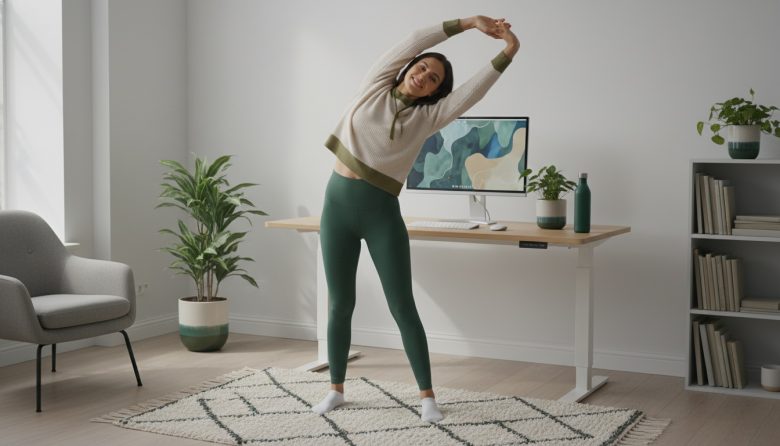
Hey friend, picture this: It's 2 p.m., you're buried in spreadsheets, and that familiar ache creeps into your lower back. Your legs feel like lead from hours glued to your chair, and scrolling through emails seems like the only motion you'll get today. I get it—desk jobs can turn us into statues, but here's the gentle truth: sitting for long stretches isn't just uncomfortable; studies show it ups risks for things like heart issues and tight muscles. The good news? You don't need a gym membership or fancy gear to shake things up.
I'm Sara, and I've been there during my own office marathons, feeling foggy and stiff by quitting time. But tiny shifts made a world of difference—like standing for calls or sneaky stretches. These quick tips are for real life: no overwhelm, just doable wins that fit your day. Stick with me, and by the end, you'll have a plan to feel lighter and more alive at your desk. Many of us desk-dwellers start small and build from there—it's okay if it takes a few tries.
Pairing movement with habits like those in How to Stay Hydrated Throughout Your Day keeps energy steady without extra effort. Ready to reclaim your desk day?
If This Sounds Like You
You're not alone if your back starts whispering complaints by mid-afternoon. Maybe Zoom meetings keep you pinned in place, barely shifting for hours. Or post-lunch energy dips leave you slumped, dreaming of a real walk.
Family routines pile on too—like rushing kids out the door, then straight to emails with no break. It's common; so many of us juggle this. The relief? Simple tweaks that fit right in.
Try This First: Your 2-Minute Chair Reset
Start here, especially on those low-energy mornings. Sit tall, feet flat on the floor, and roll your shoulders back five times. Then, tilt your head side to side gently, holding each for 10 seconds—breathe deep as you go.
Picture wrapping up a family breakfast rush; you plop down for work, but this reset wakes your body in just two minutes. No one notices, and it eases that instant tension. Try it now—feel the looseness already?
Do this every hour; it's your easiest entry point. Many friends swear it cuts end-of-day soreness right away.
Sneak Steps Into Endless Emails
Emails never end, right? Set your phone timer for 30 minutes—when it buzzes, stand and walk five laps around your desk. That's 20-30 steps, no big deal.
Think of it during a hectic day with kid pickups looming; those mini-walks clear your head for better focus. Pair with sips from your water bottle, like in How to Stay Hydrated Throughout Your Day, for double refreshment. It's sneaky and builds up fast.
Over a day, that's hundreds of steps without leaving your spot. Gentle reminder: small adds up, friend.
Turn Calls Into Gentle Movement Moments
Calls are gold for motion. Grab wireless headphones and pace slowly—back and forth by your desk. Keep your voice steady; no one knows.
On low-energy days, like after a rough night's sleep, this wakes your legs without draining you. I once powered through a team huddle this way, feeling sharper by the end. Standing boosts blood flow too.
If no wireless? Stack books for a quick standing desk. It's flexible for any call length.
Desk Stretches That Double as Deep Breaths
Tension from work stress? Link stretches to breaths. Shrug shoulders to your ears, hold three seconds, drop—repeat five times, exhaling fully each drop.
Follow with neck rolls: circle slowly, five each way, eyes closed if you can. Imagine unwinding after a family argument; this combo melts knots fast. It ties right into stress relief, leaving you calmer.
Do shoulder shrugs mid-meeting wait or email batch. Breath makes it restorative, not just physical.
Make It Your Own: Mix and Match for Your Day
Tailor to your flow—short shifts? Double the chair resets. Long hauls? Layer in pacing calls.
Low energy? Stick to seated stretches. High drive days? Add desk push-ups on your chair arms. Here's a quick list:
- Morning fog: Breath stretches first.
- Afternoon slump: Email walks + hydration.
- Evening wind-down: Full reset before log-off.
Play around; what sticks for you matters most.
Your 5 Easy Steps to a More Active Desk Day
Build a routine with these steps—they stack naturally. No rush; pick one to start.
- Assess your setup: Check chair height—knees at 90 degrees? Adjust for comfort. Example: I raised mine with a cushion, ditching instant hip pinch.
- Set phone reminders: Alarms for walks and resets every 45 minutes. Tie to real life, like post-lunch buzz for energy, as in 10 Easy Ways to Boost Daily Energy Levels.
- Build in stretch breaks: Neck rolls during emails, shrugs on calls. A friend did this during kid homework chaos nearby—seamless.
- Track feel-good wins: Note in your phone: "Less ache today." Seeing progress motivates without pressure.
- Adjust weekly: What worked? Tweak—like more pacing if back feels tight. Make it evolve with you.
Follow this, and movement weaves in effortlessly. It's about gentle consistency over perfection.
FAQ
What if I have no space to move?
You're not stuck—seated options shine here. Chair resets and shoulder shrugs need zero extra room. Many in tight cubicles thrive with just these; breathe deep, and motion happens in place.
How do I start without coworkers noticing?
It's easier than you think—pace on calls with headphones, or reset during solo email time. Subtle shrugs look like thoughtful pauses. Start small; most won't bat an eye, and you'll gain confidence quick.
Does this help with back pain?
Yes, gently—micro-walks and stretches ease tightness without strain. Posture resets strengthen over time. If pain persists, chat with a doc, but many feel relief in days from consistent tweaks.
Can I do this on low-energy days?
Absolutely—scale back to 1-minute resets or breath shrugs. They're restorative, not exhausting. Link with light eating from Your 7-Day Light Eating Plan for More Energy for a soft boost.
How soon will I feel a difference?
Often by day's end—less slump, more pep. Full benefits like better focus build in a week. Be patient; your body's grateful for the care.
What's one tip you'll try tomorrow? Share your win in the comments—we're in this together. You've got this, friend!



Comments
Pingback: How to Relieve Stress with a Quick Tidy Up: The 5-Minute Dopamine Reset - Hush Kite