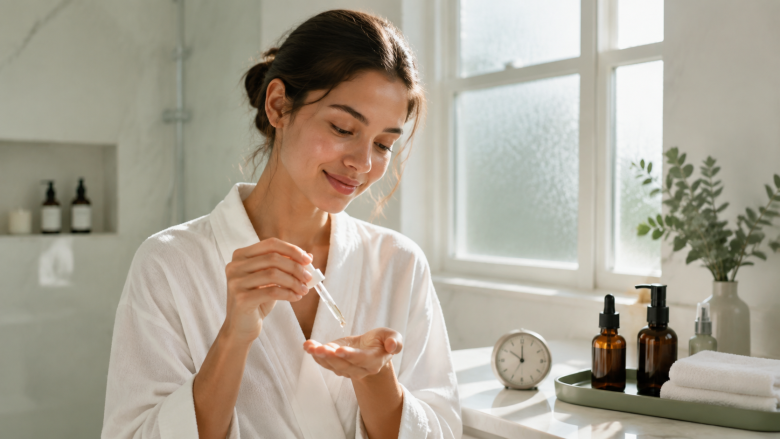
If you want clearer skin, the answer is not a $200 serum. It's a daily routine built on the right order, the right ingredients, and the right timing. The good news: you can do it in 10 minutes a day. The bad news: most people waste those 10 minutes on the wrong products in the wrong sequence. After years of trial and error, I have landed on a system that merges the practical 4-2-4 rule with the layering logic of Korean skincare. This is not a trend roundup. This is a working template you can start tonight.
Why Your Current Routine Is Not Working
Most people have a routine that is either too aggressive or too passive. They either scrub their face into redness with physical exfoliants, or they wash with a foaming cleanser that strips the skin barrier and never moisturize properly. The result is a cycle of breakouts, oiliness, and irritation.
I made this mistake myself. When I first started taking skincare seriously, I bought a 10-step routine with all the popular actives. My skin turned red, flaky, and broke out in places it never had before. The problem was not the products. The problem was the order, the frequency, and the lack of a buffer between harsh ingredients. I learned the hard way that more products do not equal better skin. A strategic 10-minute routine beats a chaotic 30-minute one every time.
The thing nobody tells you about clear skin is that it is largely a function of barrier health. If your skin barrier is compromised, every active ingredient you apply will cause more harm than good. The goal is not to strip the skin. The goal is to support its natural renewal process.
What Is the Best Daily Routine for Clear Skin?
A good daily routine for clear skin has four non-negotiable pillars: cleansing, treatment, moisturizing, and protection. That is it. Everything else - toners, essences, masks - is optional enhancement, not a requirement.
The most effective sequence is: cleanse, treat, moisturize, protect (in the morning). At night, it is: cleanse, treat, moisturize. The treatment step is where you address acne, dullness, or texture. The moisturizer locks in hydration and repairs the barrier. The sunscreen prevents hyperpigmentation and premature aging.
What most guides miss is the timing. You need to wait 30 to 60 seconds between the cleansing step and the treatment step. Your skin needs to be slightly damp but not dripping wet. Applying a treatment on soaking wet skin dilutes it. Applying it on bone-dry skin reduces absorption. The sweet spot is a light mist or a quick pat with a towel.
Decoding the 4-2-4 Rule in Skincare
The 4-2-4 rule is a cleansing method that has gained traction among dermatologists and skincare enthusiasts. It refers to a specific time-based approach to washing your face: 4 minutes of oil cleansing, 2 minutes of water cleansing, and 4 minutes of rinsing or patting dry. It sounds excessive, but the logic is sound.
The first 4 minutes are for the oil-based cleanser. This step dissolves sebum, sunscreen, and oil-soluble impurities. The 2 minutes are for a water-based cleanser that removes sweat and water-soluble debris. The final 4 minutes are for a gentle rinse and patting the skin dry, never rubbing it.
In practice, I do not hit 10 minutes every day. But I have found that even a compressed version - 2 minutes of oil cleanse, 1 minute of foam cleanse - makes a measurable difference in blackheads and congestion. The rule works because it forces you to be gentle and thorough instead of rushing through a 30-second wash.
If you wear heavy makeup or waterproof sunscreen, the 4-2-4 rule is a game changer. A single cleanse will not remove everything. The double cleanse does. For a deeper explanation of how cleansing affects your skin's microbiome, dermatology resources from the American Academy of Dermatology confirm that gentle cleansing is foundational to skin health.
How Koreans Keep Their Skin So Clear: The Layering Method
The Korean approach to skincare is not about 12 steps. It is about layering thin, hydrating products from thinnest to thickest consistency. This allows each product to penetrate without pilling or clogging pores.
The core principle is hydration. Korean routines prioritize water-based layers like essences and serums before sealing everything with an emulsion or cream. This is why Korean skin often looks plump and dewy. It is not genetics. It is a deliberate accumulation of moisture.
Here is the practical adaptation for a Western audience: after cleansing, apply a hydrating toner or essence. Then apply a serum with active ingredients. Then apply a moisturizer. If you are very dry, finish with a few drops of facial oil. The key is to pat each layer in gently and wait 10 seconds before the next layer.
The mistake I see most often is applying a thick cream immediately after cleansing. This seals the skin but does not hydrate it. The skin stays thirsty underneath. The layering method solves this by adding water back into the skin before sealing it.
Building Your 10-Minute Clear Skin Routine
Here is the exact routine I use and recommend to friends who want results without spending their whole evening in the bathroom. This is the 10-minute version. It is fast, effective, and uses proven ingredients.
Morning Routine (5 Minutes)
- Step 1: Splash with water or gentle cleanse (30 seconds). Most people do not need a foaming cleanser in the morning. Just rinse with lukewarm water. If you are oily, use a very mild cleanser.
- Step 2: Vitamin C serum (1 minute). This is the antioxidant step that fights free radicals and brightens skin. Look for a stable form like ascorbic acid or a derivative.
- Step 3: Moisturizer (1 minute). Use a lightweight gel cream if you are oily, or a richer lotion if you are dry.
- Step 4: Sunscreen (2.5 minutes). This is non-negotiable. Use SPF 30 or higher. Apply it as the last step. Give it time to dry before makeup.
Night Routine (5-7 Minutes)
- Step 1: Oil cleanser (2 minutes). Massage gently to break down sunscreen and sebum. Rinse thoroughly.
- Step 2: Water-based cleanser (1 minute). This removes any residue from the first cleanse.
- Step 3: Treatment serum (1 minute). This is where you use exfoliants or acne fighters. Alternate between a BHA (salicylic acid) and a retinoid on different nights.
- Step 4: Moisturizer (1 minute). Use a barrier-repairing cream with ceramides or niacinamide.
If you have extra time, add a hydrating toner before the serum. But if you only have 10 minutes, skip the toner. The serum and moisturizer are the priority.
Ingredient-Specific Guidance for Each Step
You cannot just buy any product. The ingredient list matters more than the brand name. Here is what to look for at each step, and what to avoid.
Cleansers: Sulfate-Free Is the Baseline
Avoid cleansers with sodium lauryl sulfate (SLS). It strips the skin. Look for words like "gentle" or "cream" or "gel" cleanser. For the oil cleanse, use pure oils like jojoba, squalane, or a cleansing balm. Do not use coconut oil on your face unless you want clogged pores.
Treatment Serums: Know Your Actives
This is where you get the most bang for your buck. The two main categories are exfoliants and retinoids.
Salicylic acid (BHA) is oil-soluble. It penetrates into the pore to dissolve the gunk that causes blackheads and whiteheads. It is best for oily and acne-prone skin. Use a 2% concentration, no more than 3 times a week at first.
Niacinamide is a form of vitamin B3. It is not an exfoliant. It reduces inflammation, regulates oil production, and strengthens the skin barrier. A 5% niacinamide serum is a great daily option for most skin types. It pairs well with almost anything.
Retinoids (adapalene, tretinoin, or retinol) are the gold standard for anti-aging and acne. They speed up cell turnover. But they cause irritation if you start too fast. Start with a pea-sized amount, twice a week, and build up.
The mistake most people make is using all of these at once. Do not layer a BHA with a retinoid on the same night unless you have built up a serious tolerance. You will wreck your skin barrier. Alternate them.
Moisturizers: Ceramides, Glycerin, and Squalane
Your moisturizer should be boring. It should not have acids or strong actives. It should contain ceramides, glycerin, or squalane to rebuild the barrier. If you are acne-prone, avoid heavy creams with shea butter or mineral oil. They can clog pores.
The 20-Minute Full Version for Stubborn Skin
If your skin is not responding to the 10-minute routine, you need to upgrade. The 20-minute version adds a weekly mask and a lengthened massage step. This is not for everyone. It is for people with persistent texture or congestion.
Once a week, do a clay mask (like kaolin or bentonite) for 10 minutes before your evening cleanse. This draws out impurities. Follow with a hydrating sheet mask or a gel mask with hyaluronic acid for 10 minutes. This pairing is the closest you can get to a spa facial at home.
I do this on Sundays. It takes 20 minutes, and it has dramatically reduced my monthly breakouts. The key is not to overdo it. Once a week is enough. Any more and you risk dehydration.
Lifestyle Factors: The Missing Piece of the Puzzle
No topical product can fix what your diet and sleep are breaking. I learned this when I was sleeping 5 hours a night and eating a lot of sugar. My skin broke out even with a perfect routine. The inflammation was coming from inside.
Sleep and Stress
Your skin repairs itself while you sleep. Cortisol, the stress hormone, increases oil production and inflammation. If you are chronically stressed or sleep-deprived, your skin will show it. Prioritizing 7 to 8 hours of sleep is as effective as a mid-tier serum.
For a way to wind down that supports this, consider pairing your evening skincare with a simple daily routine to boost your mood. Lowering stress levels directly benefits your skin barrier function.
Diet and Hydration
Dairy and high-glycemic foods are the most common dietary triggers for acne. This is not true for everyone, but it is worth testing. Try cutting out milk for two weeks and see what happens. Also, drink enough water. Dehydration makes your skin look dull and makes fine lines more visible.
You do not need a radical diet. Just reduce processed sugar and increase vegetables. A gut-friendly approach to eating supports clear skin better than any supplement.
Movement and Circulation
Exercise increases blood flow, which delivers oxygen and nutrients to skin cells. It also helps flush out toxins through sweat. You do not need a marathon. A brisk 20-minute walk can make a difference. If you want to make it a habit, check out this guide on starting a simple morning walk routine. It is low-impact and pairs well with your skincare.
Common Mistakes That Sabotage Clear Skin
I have seen people do the right things in the wrong way and then wonder why nothing works. Here are the top mistakes I see.
Over-Exfoliating
If your skin feels tight or looks shiny like plastic, you have over-exfoliated. You have stripped away the protective oils. This leads to rebound oiliness and breakouts. Your exfoliant should be used 2 to 3 times a week, not every day.
Skipping Sunscreen
Acne marks and dark spots will not fade if you are not wearing sunscreen. UV light darkens hyperpigmentation and breaks down collagen. If you are using a retinoid or a BHA, sunscreen is not optional. It is mandatory.
Picking and Popping
I know it is tempting. But popping a pimple pushes bacteria deeper and causes scarring. Use a pimple patch with hydrocolloid instead. It absorbs fluid and protects the spot while it heals.
Changing Products Too Fast
Actives take 8 to 12 weeks to work. If you switch every two weeks because you do not see results, you will never see results. Give a product a full skin cycle (about 28 days) before you judge it.
Adapting the Routine for Different Skin Types
Not everyone needs the same products. Here is how to tweak the 10-minute routine for your specific concerns.
Oily and Acne-Prone Skin
- Cleanse twice a day with a gel cleanser containing salicylic acid.
- Use a lightweight, oil-free moisturizer.
- Consider a BHA serum 3 nights a week.
- Avoid heavy creams and facial oils.
Dry and Dehydrated Skin
- Cleanse only at night. In the morning, just rinse with water.
- Use a cream cleanser, not a foaming one.
- Layer a hydrating toner and a rich ceramide cream.
- Add a facial oil as the final step to lock everything in.
Combination Skin
- Use a gentle foaming cleanser.
- Apply a lightweight gel moisturizer all over.
- Apply a BHA only on the T-zone if it is oily.
- You can use a richer cream on the cheeks if they are dry.
Sensitive Skin
- Patch test every new product for 48 hours.
- Use a cleanser with a pH of 5.5 or lower.
- Avoid fragrance and essential oils entirely.
- Use a barrier-repair cream with panthenol or centella.
- Introduce actives very slowly, once a week.
A Simple Comparison: Where to Spend Your Money
You do not need to spend a lot to get clear skin. But you should spend your money where it matters most. Here is my ranking based on results per dollar.
| Priority | Product | Why |
|---|---|---|
| 1 | Sunscreen (SPF 30+) | Prevents all future damage. |
| 2 | Retinoid (if tolerated) | Fixes acne and texture. |
| 3 | Gentle Cleanser | Prevents barrier damage. |
| 4 | Moisturizer | Keeps barrier intact. |
| 5 | Vitamin C serum | Brightens and protects. |
| 6 | Toner/Essence | Optional, nice to have. |
As you can see, the non-negotiables are sunscreen, a retinoid, a cleanser, and a moisturizer. Everything else is a bonus. If your budget is tight, skip the toner and the essence. They will not make or break your skin.
Creating a Sustainable Habit: The Consistency Factor
You can have the perfect routine, but if you only do it once a week, it will not work. Consistency is the single biggest factor in clear skin. You need to make it so easy that you cannot skip it.
Keep your products visible on the bathroom counter. Do your routine at the same time every day, ideally right after brushing your teeth. If you are exhausted, do a minimalist version: cleanse and moisturize. That is it. This takes 2 minutes and prevents you from falling into the trap of sleeping in makeup.
I also recommend connecting your skincare to another daily habit. For example, after your morning skincare, do a quick stretching session. This builds a ritual. If you are looking for a way to pair movement with your routine, this 20-minute movement routine is a great companion. It helps reduce stress, which in turn helps your skin.
When to See a Dermatologist
If you have tried a consistent routine for 12 weeks and your acne is not improving, or if it is scarring, it is time to see a professional. Prescription options like tretinoin, clindamycin, or spironolactone can work when over-the-counter products fail.
There is no shame in needing medical help. Acne is a medical condition, not a moral failing. A dermatologist can also help you figure out if your skin issue is actually acne, or if it is fungal acne, rosacea, or perioral dermatitis. These look similar but require completely different treatments.
Final Thoughts on the Daily Routine for Clearer Skin
The perfect routine is the one you can sustain. Start with the basics: cleanse, treat, moisturize, protect. Add the 4-2-4 rule when you have time. Experiment with Korean layering if your skin feels dehydrated. But above all, be patient.
Clear skin is not a destination. It is a daily practice. It is the result of showing up for yourself, even on days when you are tired, even when you do not see immediate results. Stick with it for three months. Take a photo at the start and compare it to the end. You will be surprised by the difference.